
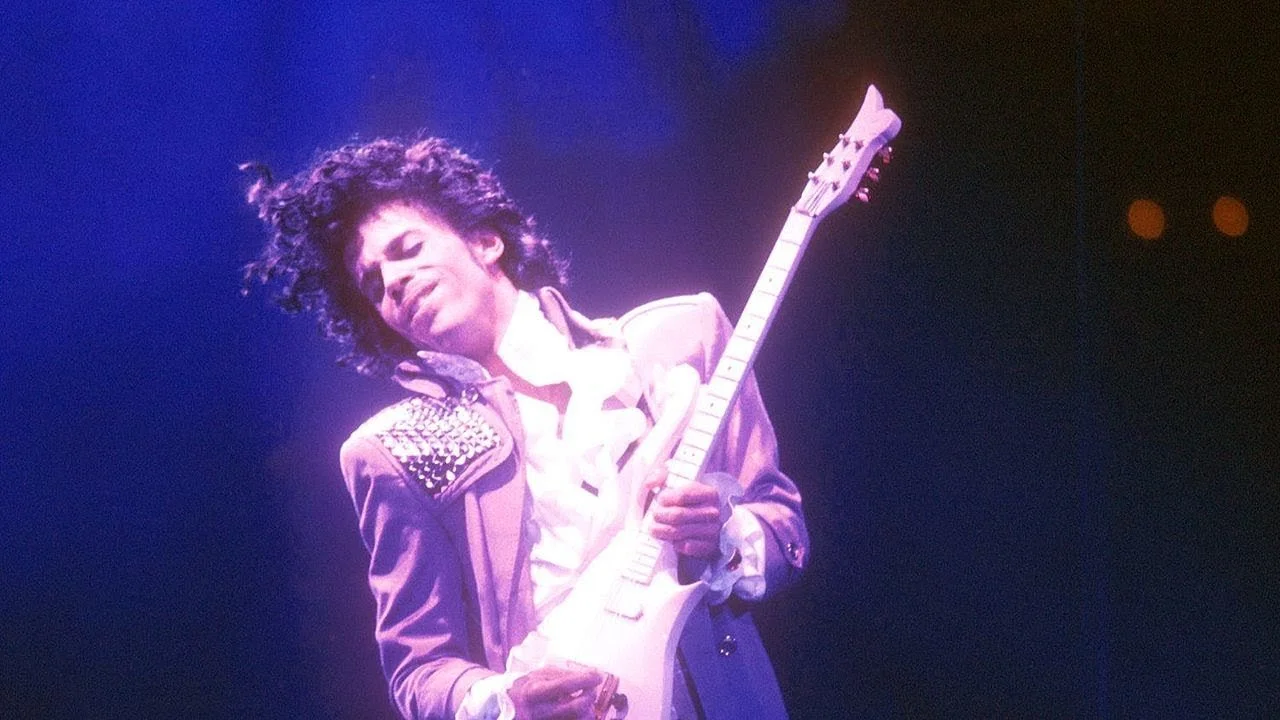
Prince - Purple Rain
Purple Rain is Prince’s 1984 album and the soundtrack to the film of the same name. It was the breakthrough project that transformed him from a successful musician into a global superstar.
The album blends rock, funk, pop, R&B, and soul, with Prince using the music to explore ambition, love, sexuality, spirituality, conflict, and emotional vulnerability. Its sound is especially notable for the combination of hard-edged guitar, synthesizers, drum machines, and Prince’s highly expressive vocals.
The project emerged during a particularly important period in Prince’s career. He created the semi-autobiographical film Purple Rain around a fictional musician named The Kid, whose struggles with relationships, family, competition, and artistic identity mirror aspects of Prince’s own life and career. The film helped turn the album into a cultural phenomenon rather than simply another record release.
Several songs became defining moments in Prince’s career. “When Doves Cry” is famous for its unconventional production and sparse arrangement, while “Let’s Go Crazy” combines rock energy with spiritual imagery. “I Would Die 4 U” and “Baby I’m a Star” showcase his pop and funk sensibilities. The title track, “Purple Rain,” became one of his signature performances, building from a restrained ballad into an emotionally powerful guitar-driven climax.
The album was a massive commercial and cultural success. It established Prince as a performer capable of moving effortlessly between genres while maintaining a distinctive artistic identity. The accompanying film also became an important part of his legacy, and the project won multiple major awards.
Today, Purple Rain is generally regarded as the defining album of Prince’s career and one of the landmark albums of the 1980s. Its influence extends beyond its individual songs: it demonstrated how music, film, fashion, performance, and personal mythology could be combined into one cohesive artistic statement.

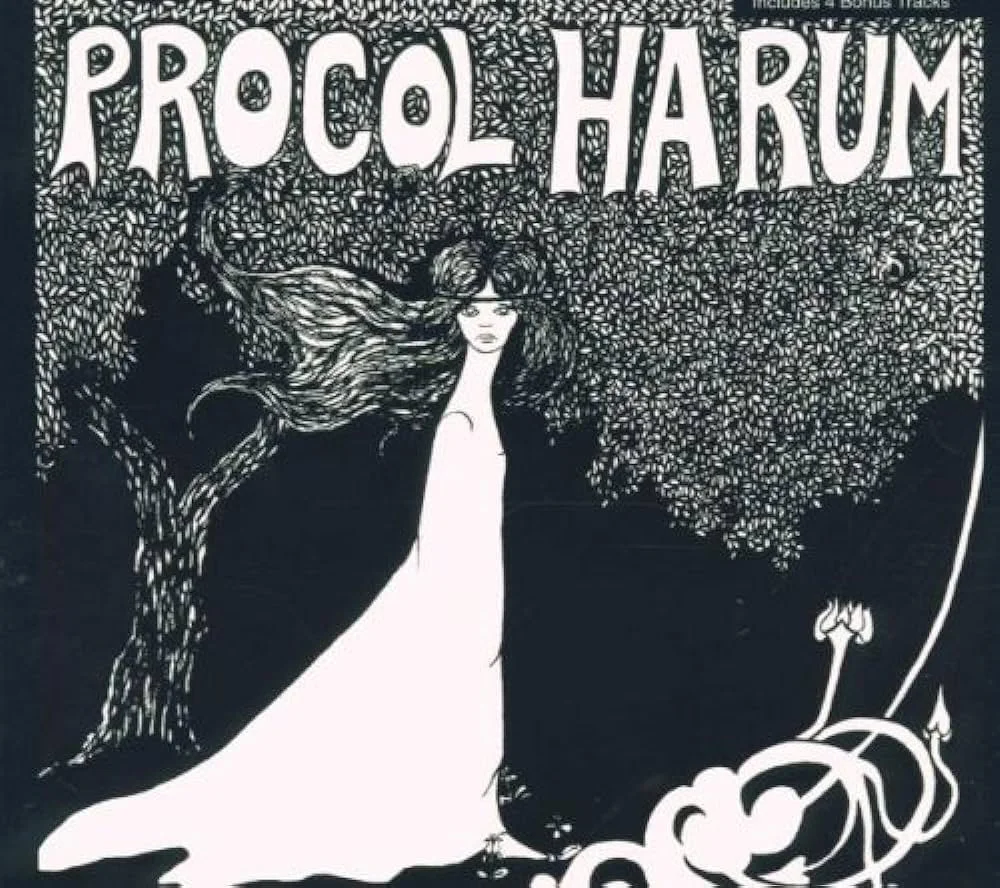
Procol Harum - A Whiter Shade of Pale
“A Whiter Shade of Pale” by Procol Harum stands as one of the most iconic and enduring songs of the 1960s. The English rock band Procol Harum was formed in Southend-on-Sea, Essex, in 1967, and they played their first live gig at London’s Speakeasy club on the day “A Whiter Shade of Pale” was released on 12 May 1967. Lyricist Keith Reid got the title and starting point for the song at a party, where he overheard someone saying to a woman, “You’ve turned a whiter shade of pale”, and the phrase stuck in his mind. The music was composed by Gary Brooker, with Matthew Fisher’s organ part so prominent that he also eventually received a songwriting credit after a protracted court battle. The song was recorded at Olympic Sound Studios in London, produced by Denny Cordell, and completed in two takes, with no subsequent overdubbing.
The song’s success was immediate and extraordinary. In June “A Whiter Shade of Pale” topped the UK charts for six weeks, while in the United States, the single reached number 5 on the Billboard Hot 100 and sold over 1 million copies. It became one of the few singles to have sold more than 10 million copies. The song’s distinctive baroque sound, featuring Fisher’s Hammond organ melody inspired by Bach’s Air on the G String, combined with Reid’s enigmatic, surrealist lyrics to create something truly unique. The song has been interpreted as dealing in metaphorical form with a male/female relationship ending in a sexual act, described through references to sex as a form of travel, usually nautical, using mythical and literary journeys. However, Reid himself stated he was simply trying to conjure a mood rather than tell a straightforward story.
The song’s legacy has proven remarkably durable. In 1977, “A Whiter Shade of Pale” was voted Best British Pop Single 1952-1977, sharing the honours with Queen’s Bohemian Rhapsody. The song was inducted into the Grammy Hall of Fame in 1998 and into the Rock & Roll Hall of Fame in 2018. Over the years it has been released as a cover version by at least 1,000 different artists. The phrase “a whiter shade of pale” itself has entered common usage in the English language. Despite the band’s continued success with albums like “A Salty Dog” and “Shine on Brightly,” and their career lasting until 1977 before reforming in 1991, “A Whiter Shade of Pale” remained their signature achievement and one of the defining songs of the Summer of Love era.
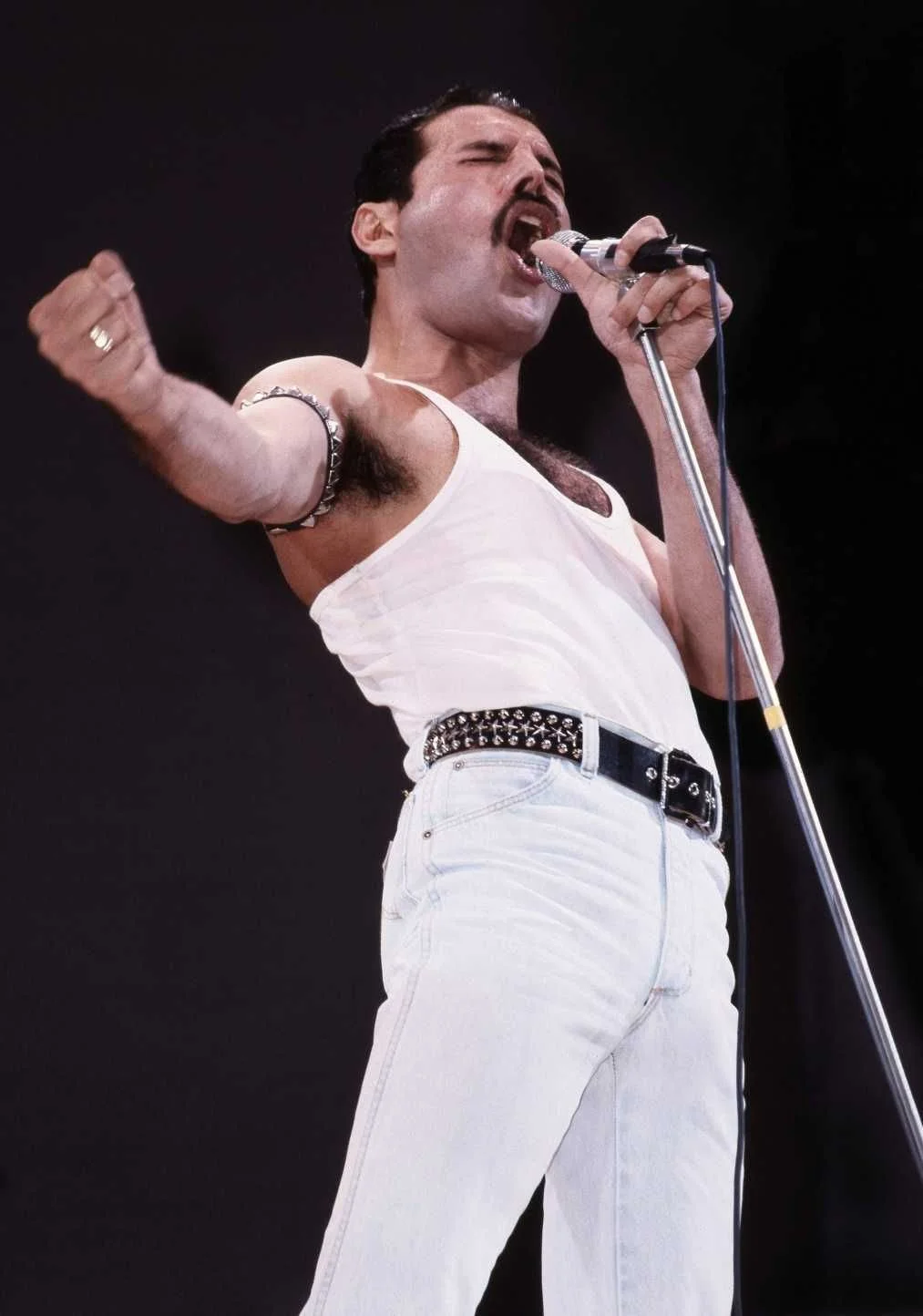
Queen - Radio Ga Ga
"Radio Ga Ga" by Queen is a dynamic and anthemic song that was released in 1984 as part of their album "The Works." Written by Queen's drummer Roger Taylor, the song is notable for its catchy melody, powerful vocals by Freddie Mercury, and its commentary on the evolving role of radio in popular culture.
The lyrics of "Radio Ga Ga" reflect on the nostalgic era when radio was the dominant medium for music and entertainment, contrasting it with the rise of television and other forms of media. The song's title is a play on words, evoking the sound of radio transmissions ("Radio Ga Ga") while also referencing the repetitive nature of pop music at the time ("Radio goo goo").
Musically, "Radio Ga Ga" features strong guitar riffs by Brian May, complemented by Taylor's driving drum beat and Mercury's soaring vocals. The song builds to a climactic chorus that encourages listeners to embrace the power of radio and its ability to connect people through music.
"Radio Ga Ga" became a commercial success for Queen, reaching the top of the charts in multiple countries. Its iconic music video, featuring scenes from Fritz Lang's film "Metropolis," further enhanced its popularity and cultural impact. Today, "Radio Ga Ga" remains a beloved classic in Queen's repertoire, celebrated for its infectious energy, thoughtful lyrics, and memorable hooks.
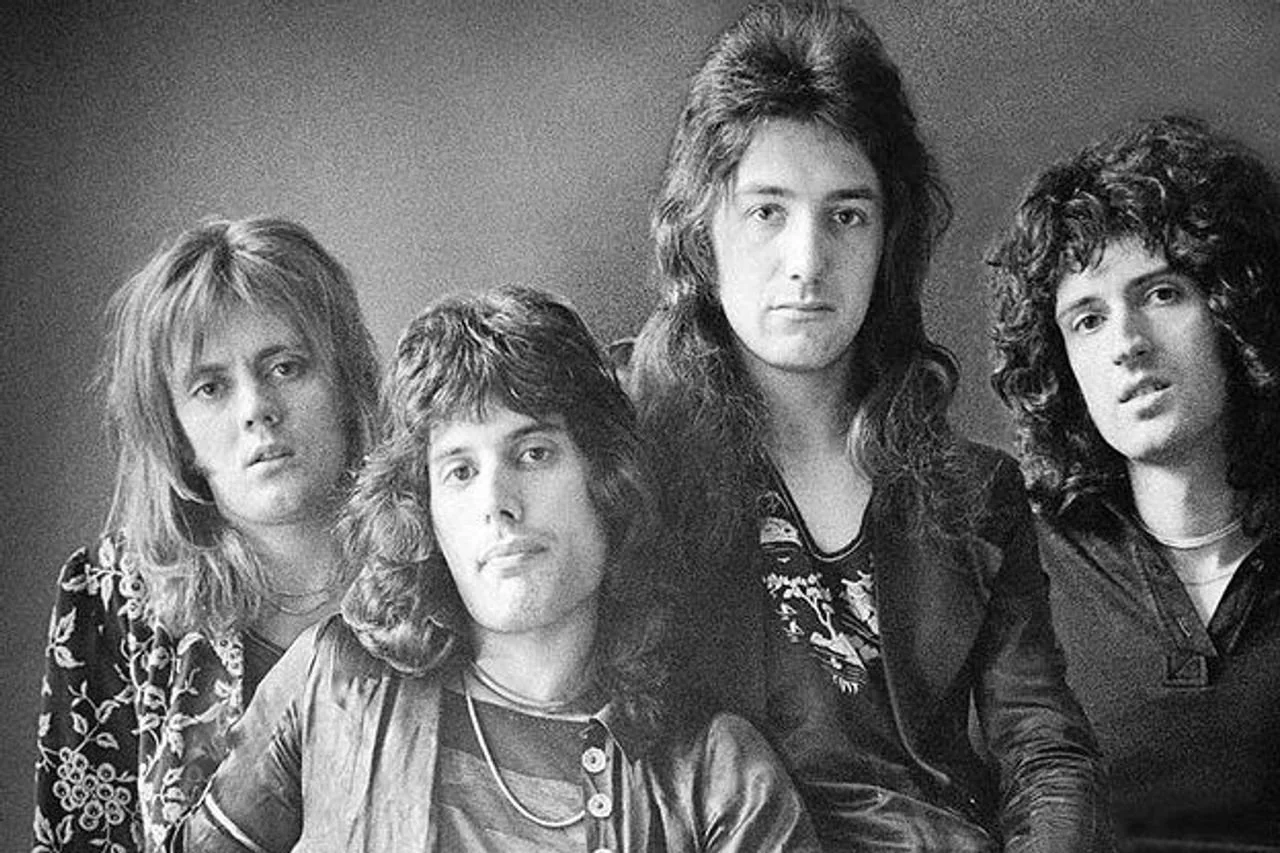
Queen - We Are The Champions
Queen's "We Are The Champions," released in 1977 as part of their album News of the World, stands as one of rock music's most enduring and recognizable anthems. Written by lead singer Freddie Mercury, the song was conceived with audience participation in mind, aiming to create a unifying and positive experience for listeners. Mercury himself stated that the "We" in the title refers to everyone who sings it, emphasizing its universal appeal.
The musical foundation of "We Are The Champions" is built upon Mercury's piano work, complemented by the rhythmic backing of Roger Taylor on drums and John Deacon on bass guitar. Brian May's guitar contributions, initially subtle, build to a powerful solo that intertwines with the final chorus. Mercury incorporated numerous jazz chords and complex harmonies, particularly in the choruses, which feature four- and five-part vocal arrangements. The lead vocal performance is notably demanding, showcasing Mercury's impressive range and power, as famously demonstrated during Queen's Live Aid concert in 1985.
The song's lyrics, while often interpreted as a celebration of victory, also convey a deeper message of perseverance and overcoming adversity. The verses speak of paying dues, enduring challenges, and making mistakes, ultimately leading to a declaration of triumph. This narrative arc, combined with the soaring melody and dramatic harmony, creates a powerful emotional impact. The song's structure, which transitions from a more intimate, almost confessional verse to a grand, triumphant chorus, is a testament to Mercury's unique songwriting approach.
"We Are The Champions" was released as a single alongside "We Will Rock You," and the two songs were frequently played consecutively at the close of Queen concerts, becoming a traditional pairing. The song achieved global success, reaching high positions on charts worldwide, including number 2 in the UK and number 4 on the Billboard Hot 100 in the US. Its widespread popularity led to its induction into the Grammy Hall of Fame in 2009 and being voted the world's favorite song in a 2005 poll.
Beyond its commercial success, "We Are The Champions" has become synonymous with sporting events, often played to celebrate victories by teams and athletes. Its powerful message of resilience and triumph has resonated across various cultural contexts, making it a timeless anthem that continues to inspire and unite audiences around the globe.

Queen and David Bowie - Under Pressure
Queen and David Bowie’s “Under Pressure” is a powerful song about the emotional and social strain created by modern life, including fear, isolation, conflict, and the feeling of being overwhelmed by personal and public expectations. Rather than offering a simple solution, the song gradually turns toward compassion and love as forms of human connection that can help people endure difficult circumstances. The collaboration began in 1981 when Bowie joined Queen during recording sessions at Mountain Studios in Montreux, Switzerland, while the band was developing material for its album Hot Space. The song grew out of an improvised jam built around a memorable bass riff, with Freddie Mercury and Bowie sharing the vocals and contributing to its spontaneous, dramatic character. Released as a single in October 1981, “Under Pressure” reached number one in the United Kingdom and later appeared on Hot Space in 1982. It became one of the most celebrated collaborations in rock history, remembered for its distinctive bassline, intense vocal performances, and enduring message about the need for empathy in a pressured world.

R.E.M. - What's the Frequency, Kenneth
"What's the Frequency, Kenneth?" is a song by the American alternative rock band R.E.M. It was released as the lead single from their ninth studio album, "Monster," in 1994. The title of the song refers to an incident in 1986 when news anchor Dan Rather was attacked on the streets of New York City by a man who kept repeating the question, "What's the frequency, Kenneth?" The phrase became a bizarre and infamous pop culture reference.
R.E.M.'s song, written by band members Bill Berry, Peter Buck, Mike Mills, and Michael Stipe, doesn't directly address the incident but incorporates the mysterious and surreal nature of the event into its lyrics. "What's the Frequency, Kenneth?" features a dynamic rock sound and is one of the more notable tracks from the "Monster" album.

Rag'n'Bone Man - Human
"Human" is a powerful song by British singer-songwriter Rag'n'Bone Man, released in 2016 as the lead single from his debut studio album, Human. The song explores themes of vulnerability, self-reflection, and the complexities of human nature. It features a soulful blend of blues, pop, and electronic influences, with Rag'n'Bone Man's deep, gravelly voice taking center stage.
In the song, Rag'n'Bone Man sings about the inevitability of making mistakes and the limitations of being human. The chorus, where he repeatedly sings "I'm only human after all," captures the essence of accepting one’s imperfections and flaws. It's both a personal confession and a universal reminder that nobody is perfect, and everyone has their struggles.
"Human" became a major hit, reaching the top of the charts in multiple countries and earning Rag'n'Bone Man critical acclaim. The song's message of humility and authenticity resonated widely with listeners, making it a memorable anthem for those grappling with their own human experiences.
Ramones - Blitzkrieg Bop
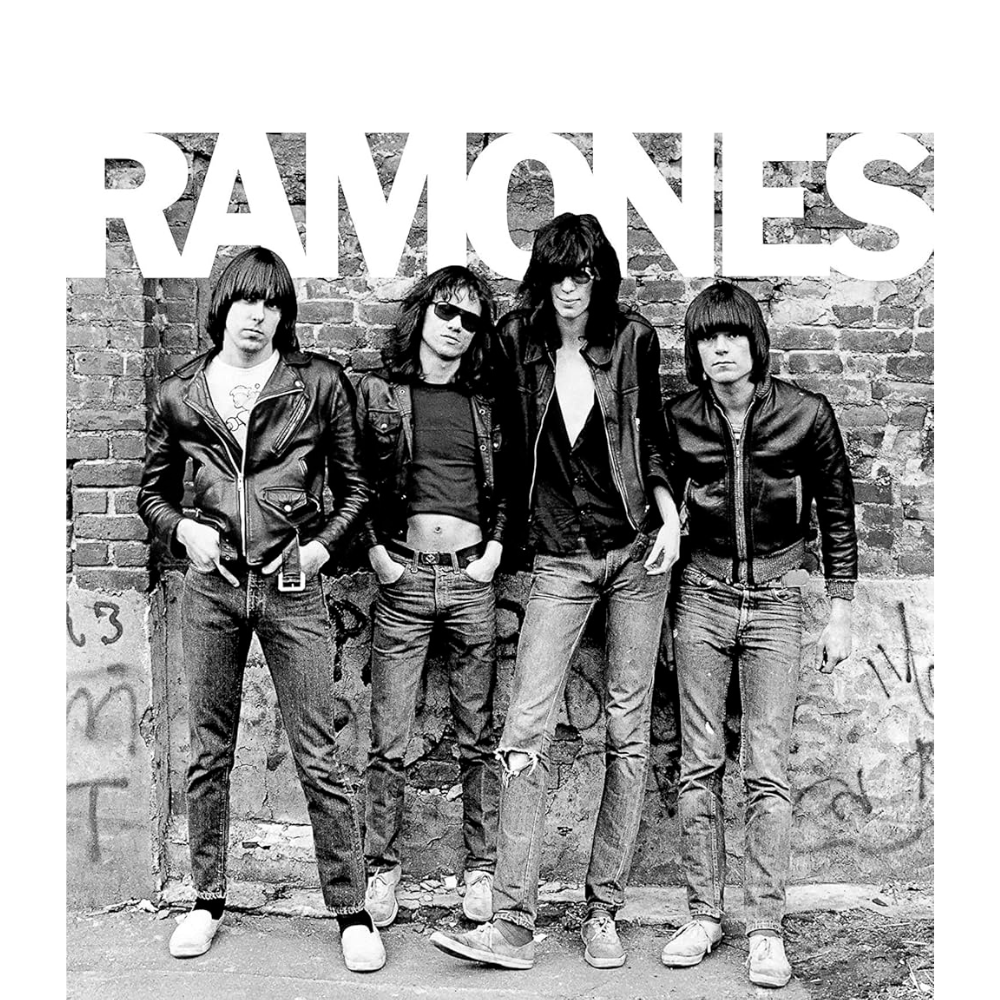
"Blitzkrieg Bop" was the opening track on the Ramones' self-titled debut album, released on April 23, 1976, and it quickly became one of the defining statements of early American punk rock. The song's famous "Hey! Ho! Let's go!" chant grew out of drummer Tommy Ramone's idea to write a rallying, chant-like tune inspired in part by the Bay City Rollers' pop hit "Saturday Night," while Tommy later explained that the song was really about the excitement of kids going to a concert and losing themselves in the experience rather than anything political or militaristic. According to Tommy, the song originally had the working title "Animal Hop," before Dee Dee Ramone helped reshape it into "Blitzkrieg Bop," giving it the tougher, more confrontational edge that matched the band's image. The debut LP itself was recorded quickly and cheaply—producer Craig Leon recalled that it cost roughly $6,400—yet its stripped-down speed, brevity, and raw sound made it feel radically different from much of the mainstream rock released in 1976, helping establish the template for punk's fast, direct, no-frills attack.
Ramones Blitzkrieg Bop Lyrics
Hey ho, let's go
Hey ho, let's go
Hey ho, let's go
Hey ho, let's go
They're forming in a straight line
They're going through a tight wind
The kids are losing their minds
The Blitzkrieg Bop
They're piling in the back seat
They generate steam heat
Pulsating to the backbeat
The Blitzkrieg Bop
Hey ho, let's go
Shoot them in the back now
What they want, I don't know
They're all revved up and ready to go
They're forming in a straight line
They're going through a tight wind
The kids are losing their minds
The Blitzkrieg Bop
They're piling in the back seat
They generate steam heat
Pulsating to the backbeat
The Blitzkrieg Bop
Hey ho, let's go
Shoot them in the back now
What they want, I don't know
They're all revved up and ready to go
They're forming in a straight line
They're going through a tight wind
The kids are losing their minds
The Blitzkrieg Bop
They're piling in the back seat
They generate steam heat
Pulsating to the backbeat
The Blitzkrieg Bop
Hey ho, let's go
Hey ho, let's go
Hey ho, let's go
Hey ho, let's go


Ramones - Merry Christmas (I Don't Want to Fight Tonight)
"Merry Christmas (I Don't Want to Fight Tonight)" is a song by the Ramones, released as a single in 1989 and later included on their 1991 album Brain Drain. It stands out as a holiday-themed track with the band's signature fast-paced punk rock sound.
The song's lyrics mix the spirit of Christmas with a relatable sentiment of wanting peace and avoiding conflicts, especially during the holiday season. The narrator expresses a desire to have a calm and joyful time, rejecting the typical holiday stress and family disputes that often arise.
While it may not be the most traditional Christmas song, the Ramones' track has become a favorite among punk rock fans during the holiday season due to its catchy melody and relatable theme. The song also reflects the Ramones' unique ability to blend irreverence and emotional sincerity, a hallmark of their music throughout their career.


Red Hot Chili Peppers - Coffee Shop
"Coffee Shop" by the Red Hot Chili Peppers is a track from their 1995 album "One Hot Minute." The song showcases the band's unique blend of rock, funk, and alternative sounds. Lyrically, it captures themes of longing, introspection, and the simple pleasure of hanging out in a café setting.
Historically, "One Hot Minute" is notable because it's the only album featuring guitarists Dave Navarro, who brought a different musical influence compared to previous guitarist John Frusciante. The album came during a transitional phase for the band, who had experienced personal and musical changes following the departure of Frusciante and the death of guitarist Hillel Slovak.
The song itself has a laid-back vibe, with engaging rhythms and catchy melodies that make it a fan favorite. It reflects a mix of the band's funky style while also incorporating a more serious tone in the lyrics, capturing the essence of the band's ability to blend elements of fun and depth in their music.

Rob Zombie - Living Dead Girl
"Living Dead Girl" is a song by Rob Zombie, released as part of his 1998 debut solo album, Hellbilly Deluxe. The song showcases Zombie's signature blend of heavy metal, industrial rock, and horror themes, drawing inspiration from classic horror films and pop culture.
Lyrically, "Living Dead Girl" features a dark and seductive narrative, often interpreted as a tribute to the archetype of the "living dead" found in films and literature. It explores themes of desire, death, and resurrection, reflecting the filmic imagery that permeates Zombie's work. The song is known for its catchy chorus and electronic beats, combined with heavy guitar riffs, making it a standout track in Zombie's discography.
The music video further emphasizes the horror aesthetic, featuring clips reminiscent of classic horror movies, along with surreal and macabre visuals that align with Zombie's artistic vision. Over the years, "Living Dead Girl" has become an anthem in Zombie's concerts and remains popular among fans of rock and horror genres alike.
In a broader context, the song showcases Rob Zombie's unique ability to blend music with visual storytelling, solidifying his place in both the music and film industries.

Rock and Roll Hall of Fame 2004 - While My Guitar Gently Weeps
Cue 3:30 for one of the best guitar solos of all time. Prince stole the show; as a Prince will do. How lucky are we that we had him as long as we did. An true American treasure.
While My Guitar Gently Weeps is a song by the Beatles, written by George Harrison, and included on their 1968 album The Beatles (commonly known as the White Album). This version was the performance from the Rock and Roll Hall of Fame induction ceremony in 2004.
During this performance, Prince, Tom Petty, Jeff Lynne, Steve Winwood, and others paid tribute to George Harrison, who had been posthumously inducted as a solo artist. Prince delivered a memorable guitar solo during the performance, showcasing his virtuosity and stage presence. The rendition received widespread acclaim for the energy and passion brought by all the musicians involved.
This performance is often cited as one of the highlights of the Rock and Roll Hall of Fame ceremonies and serves as a testament to the enduring influence and power of George Harrison's music.

Sam Cooke - A Change Is Gonna Come
"A Change Is Gonna Come" by Sam Cooke is a powerful and iconic song that was released in 1964. Written by Cooke himself, the song became an anthem of the Civil Rights Movement and is known for its soulful sound and emotional depth. Inspired by his experiences with racial discrimination, as well as the broader struggles for social justice, the song speaks to the hope and determination for a better future.
The song's haunting orchestration, along with Cooke's impassioned vocal performance, conveys both sorrow and optimism. The lyrics express the belief that change is inevitable and that despite the hardships faced, a better day will come.
It's often considered one of the greatest songs of all time and continues to resonate with listeners due to its timeless message of resilience and hope.

Sam Cooke - Bring It On Home To Me
Sam Cooke's soulful classic, "Bring It On Home To Me," released on May 8, 1962, by RCA Victor, stands as one of his most enduring and influential recordings. The song, penned by Cooke himself, is characterized by its call-and-response vocal style, a hallmark of gospel music that Cooke seamlessly integrated into his secular R&B and soul sound. A notable feature of the original recording is the prominent backing vocals provided by Lou Rawls, whose interplay with Cooke's lead vocal adds a rich, emotional depth to the track. This dynamic vocal arrangement became a signature element of the song, contributing significantly to its widespread appeal.
Recorded on April 26, 1962, at RCA Studio 1 in Hollywood, California, "Bring It On Home To Me" was initially released as the B-side to Cooke's single "Having a Party." Despite its secondary placement, the song quickly gained traction, demonstrating its powerful resonance with audiences. It achieved considerable commercial success, peaking at number two on Billboard's Hot R&B Sides chart and reaching number 13 on the Billboard Hot 100. The song's heartfelt lyrics, expressing a plea for a lost love to return, combined with Cooke's impassioned delivery, cemented its status as a timeless ballad. Its influence extended far beyond its initial release, inspiring numerous cover versions by a diverse range of artists, including The Animals, Otis Redding, and even being explored by The Beatles during their "Get Back" sessions, underscoring its lasting impact on popular music.